What do you get to choose when you make a Tuneliq song?
When you make a Tuneliq (TOON-leek), a personalized song gift, you make three real choices that shape it: the occasion and your relationship to the person, the musical style, and the…
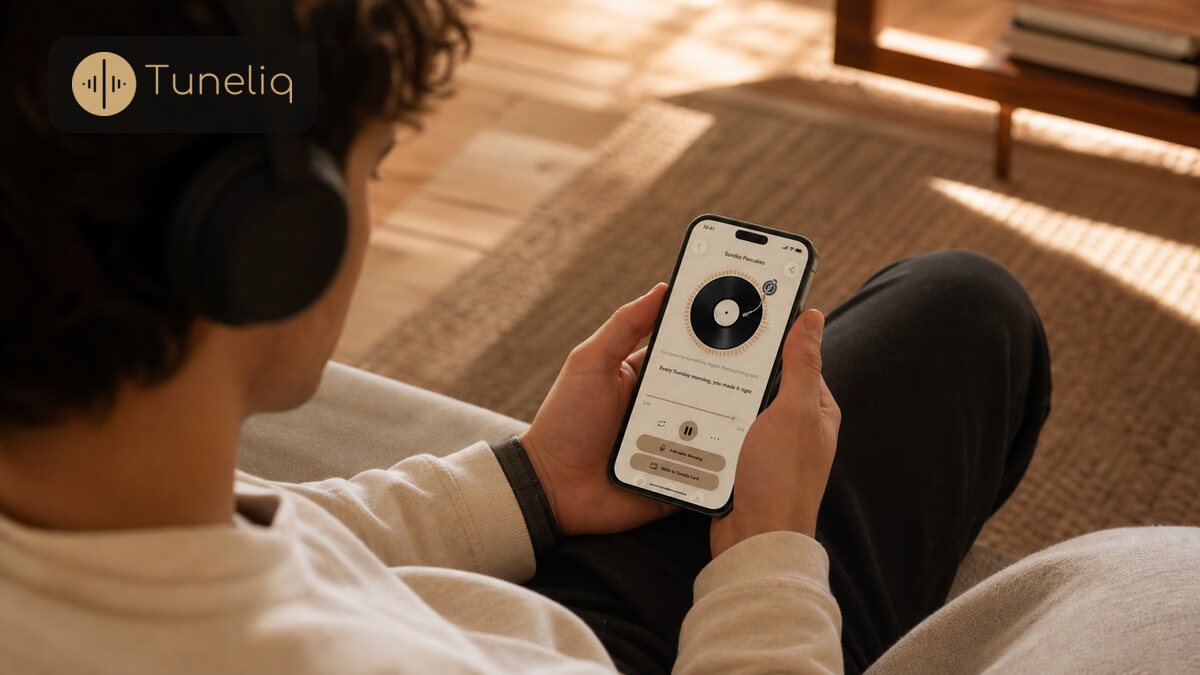
When you make a Tuneliq (TOON-leek), a personalized song gift, you make three real choices that shape it: the occasion and your relationship to the person, the musical style, and the language. Tuneliq supports 8 languages, so you can write in your own words or in the recipient's native tongue. Those choices steer the lyrics and the melody the AI writes.
What do the occasion and your relationship change?
Before the AI writes a word, you tell it two things: what the song is for, and who it's for. The occasion can be a birthday, an anniversary, a proposal, Mother's Day, a graduation, or just missing someone you can't see right now. The relationship can be a partner, a parent, a friend. A birthday song for your dad reads nothing like an anniversary song for your wife, and Tuneliq starts from that difference. You write down what you actually want to say: the specific stuff, not "happy birthday" but the thing you'd say if you weren't nervous. The AI drafts lyrics from your words, and you edit them line by line until they sound like you talking instead of a greeting card.
How much does the musical style matter?
A fair amount. You pick the musical style you want, and the AI composes around it: a melody, a backing track, and a sung vocal. The vocal is AI-composed, not you singing and not a copy of anyone's real voice. If you're not sure what fits, the inspiration gallery lets you browse by occasion and by genre and listen to real example songs before you commit. The gallery has real ones you can play, like a Mother's Day song called "Wrong Words" and an anniversary song called "Two A.M." A slow piano ballad and an upbeat pop track carry the same words very differently, so this is worth a minute of listening. AI music tools that build full tracks exist too, and they're good fun; the difference here is that every choice points at one person and one moment.
Which languages can you write in?
Eight, right now: English, Chinese, Japanese, Korean, Spanish, French, German, and Portuguese. The language isn't only the interface; the lyrics and the composition work in each one. So you can write in your own language, or write the whole song in the recipient's native language even when it isn't yours. If your grandmother's first language is Spanish and yours is English, you can give her a song that speaks to her the way she'd want to be spoken to.
Can you add your own voice, and can you change your mind later?
Two more things worth knowing. You can record a short spoken message, up to 60 seconds, as an intro before the song starts, so your own voice is there at the front of the gift. And nothing you pick is locked in. You can rewrite any line of the lyrics, ask the AI to take another pass, and preview the finished song before you send it. A typical Tuneliq runs 2 to 3 minutes, and from start to finish you're looking at about five minutes to have something you can give.
So which choices matter most?
Honestly, the words matter most; the style and the language decide how those words land. Start with the occasion and relationship so the lyrics begin in the right place. Play a couple of example songs to find a style that suits the person. Then pick the language they actually think in. If you only want to generate a lot of tracks to listen to, a music tool is a better fit; Tuneliq is built to make one song for one person. Get those three choices right and the song feels made for them, because it was.
When you're ready to try it, Tuneliq is on the App Store and Google Play, and you can start one yourself.